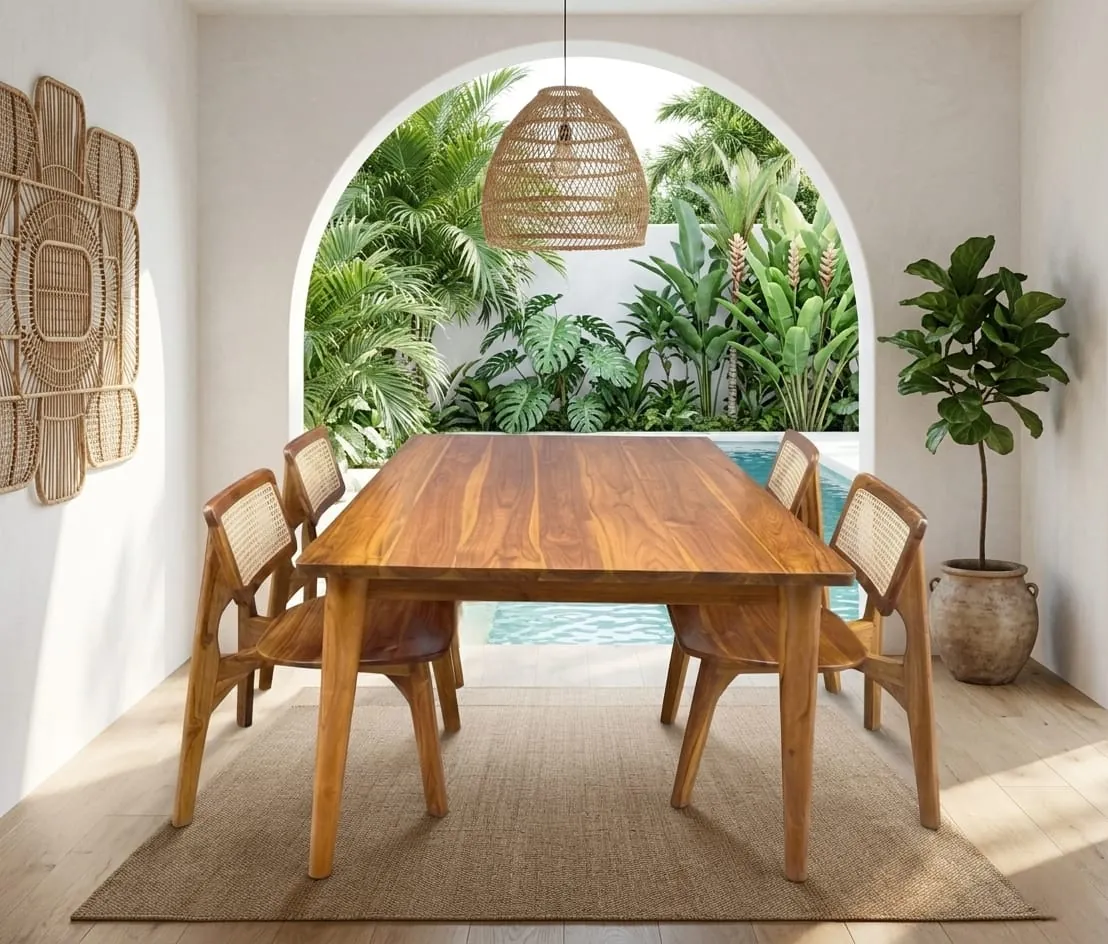
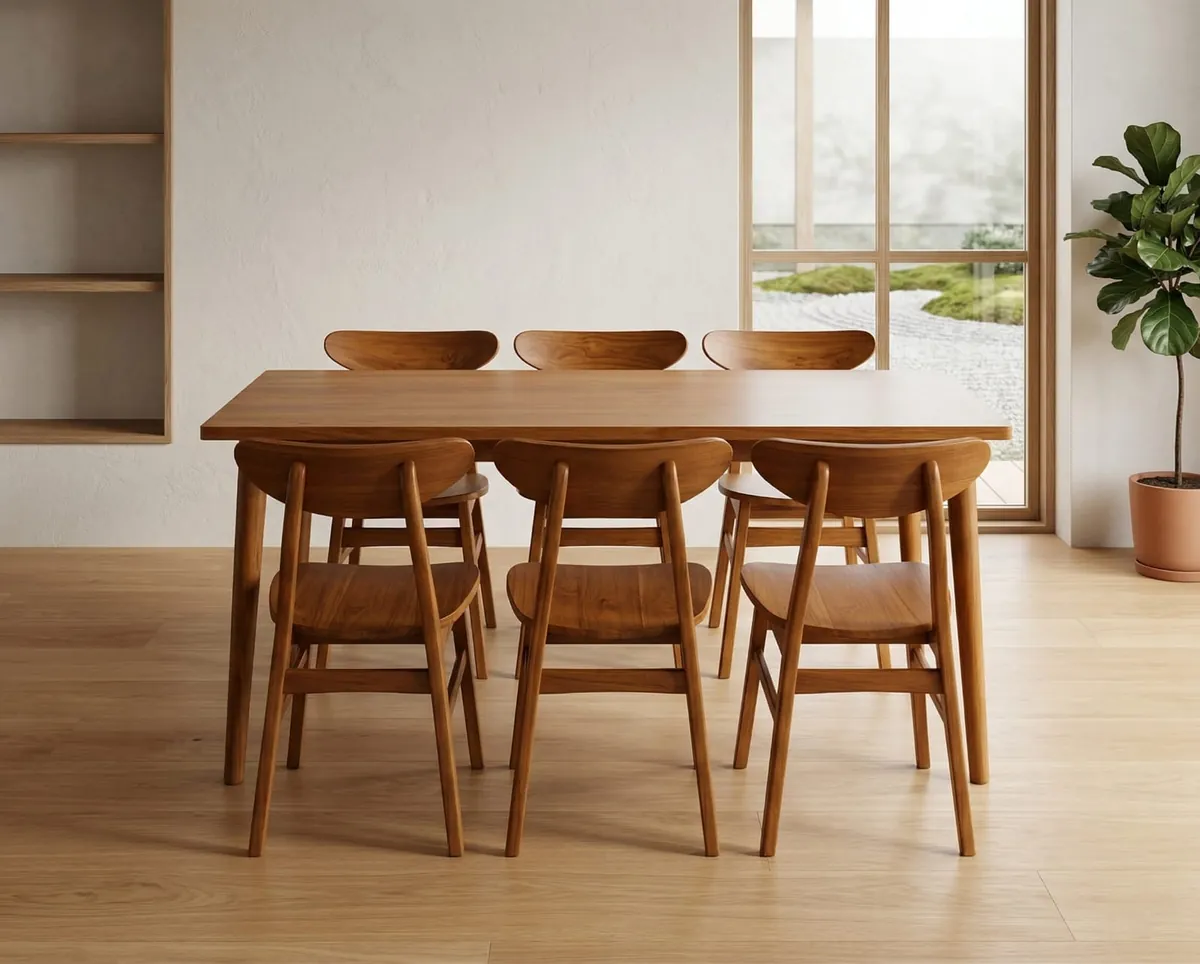
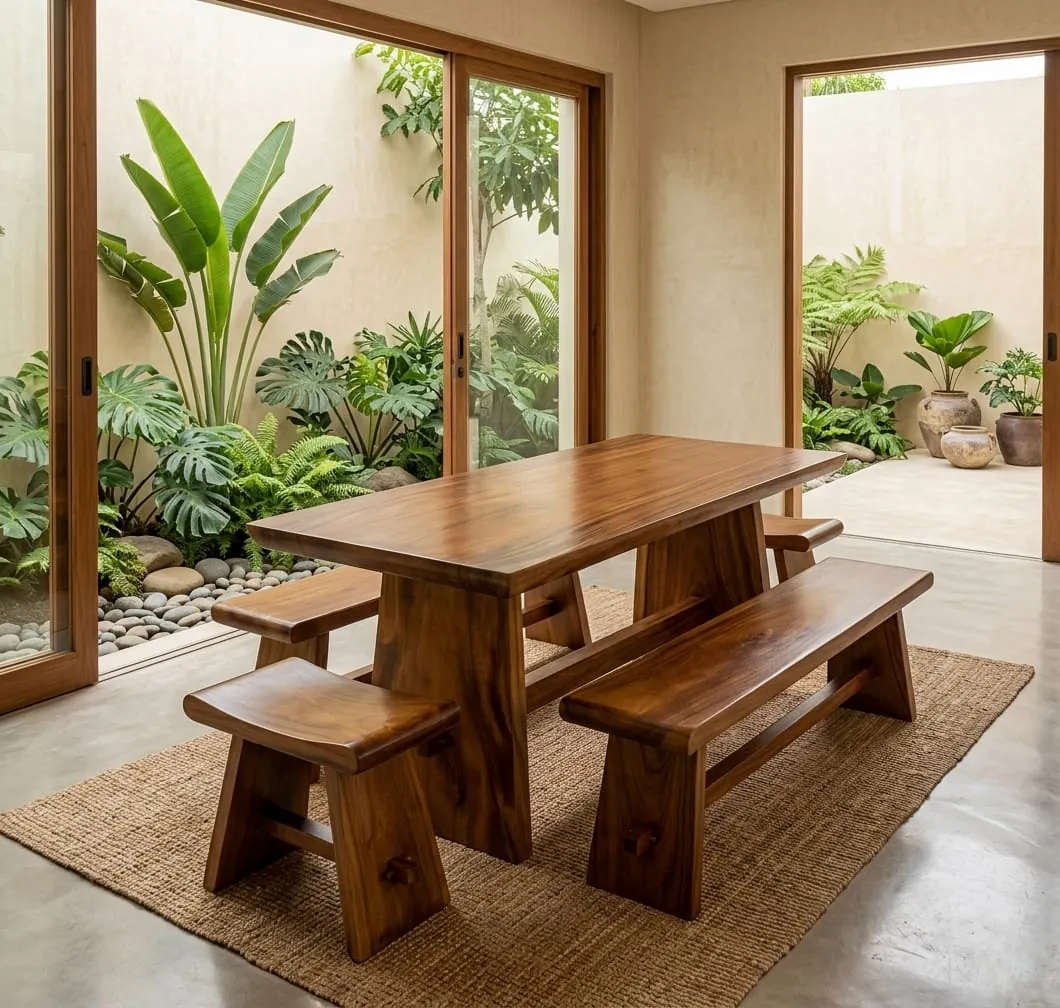
Short answer: almost all teak sold in Indonesia today is planted, either in state plantations on Java or on small family farms, and Indonesia has one of the strictest timber legality systems in the world. The papers that prove a piece of teak is legal are different for a farmer, a sawmill and an exporter, and knowing which one to ask for saves a lot of confusion.
I trained as an engineer and I prefer official figures to sales talk. This guide uses a global teak assessment, a research report on Indonesian teak farmers, Indonesian regulations and the guidelines that the Australian and EU governments use to check Indonesian timber.
Indonesian teak is planted teak
The Global Teak Resources and Market Assessment 2022, published by IUFRO in 2024, lists natural teak forests in only four countries: India, Laos, Myanmar and Thailand. The teak in Indonesia grows in plantations, and there is a lot of it:
| Figure | Value |
|---|---|
| Planted teak in Indonesia | 1.269 million hectares |
| Share of the world's planted teak | 26%, the largest of any country |
| Planted teak worldwide | 4.854 million hectares |
| Plantation teak logs harvested in Indonesia, 2022 | 639,234 m³ |
| Share of Asia's plantation teak log harvest | About 77% |
So when a seller in Bali talks about "Javanese teak" or "plantation teak", that is not a downgrade. It is simply where teak comes from in this country. What matters for quality is the age of the tree and which part of the log is used, as explained in Grade A vs Grade B teak.
Two kinds of growers: the state and the farmers
The oldest source is Perum Perhutani, the state forestry company that manages teak plantations on Java. The second source is much larger in number. A 2012 research report for ACIAR and CIFOR, which studied teak smallholders for several years, cites a national census from 2003:
- More than 3 million households owned teak trees on their own land.
- Together they managed around 80 million teak trees, about 23% of them ready to harvest.
- About 63% of these farm plantations were on Java, led by Central Java, East Java and Yogyakarta.
The same report notes that supply from the state plantations was declining while the share from farms was growing. In practice, a lot of furniture teak today comes from family plots, often a few dozen trees planted between crops and sold when the family needs money.
Why legality became a big deal
Twenty five years ago illegal logging was a serious problem in Indonesia. A 2010 Chatham House study found that illegal logging in Indonesia had fallen by 75% since its peak in 2000. One of the main tools behind that change is SVLK, the national timber legality assurance system, which every timber business in the country must follow.
Two milestones made the system matter to foreign buyers:
- Since 1 January 2013, every export of timber products, furniture included, must travel with a legality document, according to the guideline that Australia and Indonesia agreed for importers.
- On 15 November 2016, Indonesia became the first country in the world to issue FLEGT licences, the legality licence recognised by the European Union, through 22 licensing authorities. The United Kingdom followed with its own agreement in 2019.
The papers, explained
The names change a little from regulation to regulation, which is why buyers get confused. The latest update is Indonesian Forestry Ministry Regulation 23 of 2025, in force since 26 November 2025. Its definitions are summarised below:
| Paper | Who holds it | What it shows |
|---|---|---|
| S-PHL, sustainable forest management certificate | Forest managers and plantation companies | The forest itself is managed sustainably |
| S-Legalitas, legality certificate (often still called S-LK) | Sawmills, furniture factories, exporters | The business meets the legality standard; compulsory for the wood industry |
| DKP, supplier's declaration of conformity | Private forest owners, household workshops, registered timber depots | A self declaration that the wood is legal |
| V-Legal document | Certified exporter, per shipment | Legality of each export to countries other than the EU and UK |
| FLEGT licence | Certified exporter, per shipment | Legality of each export to the EU and UK |
One detail in the Australian guideline explains how small workshops fit in. Wood covered only by a DKP cannot go straight to an international market. It has to pass through a business that holds a legality certificate. That is why a small workshop that buys farm teak usually exports through a certified exporter or a freight forwarder, rather than in its own name. It is normal, and it is legal.
What this means when you buy in Bali
For furniture that stays in Indonesia, no export document is needed, but you can still ask good questions:
- Where did the wood come from? A state plantation or farm teak are both fine. A vague answer is a warning sign.
- Can the maker or the timber supplier show a certificate or a DKP? As with the certificates above, the paper may belong to the supplier rather than the workshop.
- If the furniture will be shipped abroad, who is the exporter of record? That business must hold a legality certificate and will issue the V-Legal document or FLEGT licence for the shipment.
If you plan to move furniture overseas later, keep the invoice that names the wood, and tell the seller at the start. Paperwork is much easier to arrange before a piece is made than after.
For a shorter overview of the system itself, see what SVLK certification means for buyers. To compare teak with other woods sold in Bali, read teak vs suar vs mahogany. You can also ask us about the wood and the papers for your order on WhatsApp, for example for our Tropical Dining Set.
Sources
- Kollert, W. et al. (2024). Global Teak Resources and Market Assessment 2022. IUFRO World Series Vol. 44. alice.cnptia.embrapa.br
- Rohadi, D. et al. (2012). Improving economic outcomes for smallholders growing teak in agroforestry systems in Indonesia. Final report FR2012-11, ACIAR and CIFOR. aciar.gov.au
- Lawson, S., MacFaul, L. (2010). Illegal Logging and Related Trade: Indicators of the Global Response. Chatham House. chathamhouse.org
- Governments of Australia and Indonesia (2018). Country Specific Guideline for Indonesia, Revision 1.1. agriculture.gov.au
- European External Action Service (2016). Indonesia and EU launch FLEGT licensing scheme for verified legal timber products. eeas.europa.eu
- Government of the United Kingdom (2019). Voluntary Partnership Agreement between the United Kingdom and the Republic of Indonesia on Forest Law Enforcement, Governance and Trade. gov.uk
- Kementerian Kehutanan (2025). Peraturan Menteri Kehutanan Nomor 23 Tahun 2025 tentang Perubahan atas Peraturan Menteri LHK Nomor 8 Tahun 2021. peraturan.go.id

Albert Meigo founded Bali Teak House. He trained as an aerospace engineer at Institut Teknologi Bandung and works with simulations of heat, moisture and structural loads, which is why these guides talk about moisture content and joints, not only looks.