Grade A teak is the phrase every seller uses and few explain. The short version: it means heartwood, the dense, oily, golden core of a mature teak tree. Grade B mixes in lighter sapwood. Reclaimed teak comes from old buildings. Here is how to tell them apart with your own eyes.
First, an honest warning
There is no official grading standard for teak furniture in Indonesia that a buyer can look up. Grade A, B and C are trade labels, and two sellers can use them differently. So treat the label as a starting point and check the wood itself.
What the grades usually mean
| Label | Usually means | Looks like |
|---|---|---|
| Grade A | Heartwood only, from older trees | Even golden brown, tight grain, few knots, slightly oily feel |
| Grade B | Mostly heartwood with some sapwood | Lighter streaks, more colour variation, some knots |
| Grade C | Large share of sapwood, younger trees | Pale yellow areas, many knots, lighter weight |
| Reclaimed | Old teak from houses, boats or beams | Nail holes, saw marks, deep patina, very stable |
Why heartwood matters in Bali
The natural oils and extractives that make teak resist rot and insects are concentrated in the heartwood. Sapwood has far less of them, so it is more likely to be attacked and to weather unevenly. Laboratory data from CIRAD also notes that plantation teak varies more in durability than teak from natural forests, which is one more reason to look at the actual boards rather than trust a label.
Five checks you can do yourself
- Look at the colour band. Sapwood shows as a pale, almost cream strip, usually along one edge of a board. A little on the underside is common. A lot on the visible surfaces is not Grade A.
- Feel the surface. Raw teak heartwood feels slightly waxy. Very dry, chalky wood is often younger or sapwood.
- Lift it. Mature teak has a specific gravity around 0.67 at 12 percent moisture. A chair that feels surprisingly light deserves a question.
- Check the end grain. Tight growth rings suggest slower growth and denser wood.
- Ask for the underside. Makers hide their worst boards where you do not look. A photo of the underside of a table top tells you a lot.
Is reclaimed teak better?
Reclaimed teak has had decades to dry and settle, so it is very stable, and many people love its marks. The trade off is consistency: colours vary from board to board, old nail holes may be filled, and the supply for large matching sets is limited. For a rustic table it is wonderful. For six identical chairs it can be frustrating.
What we recommend
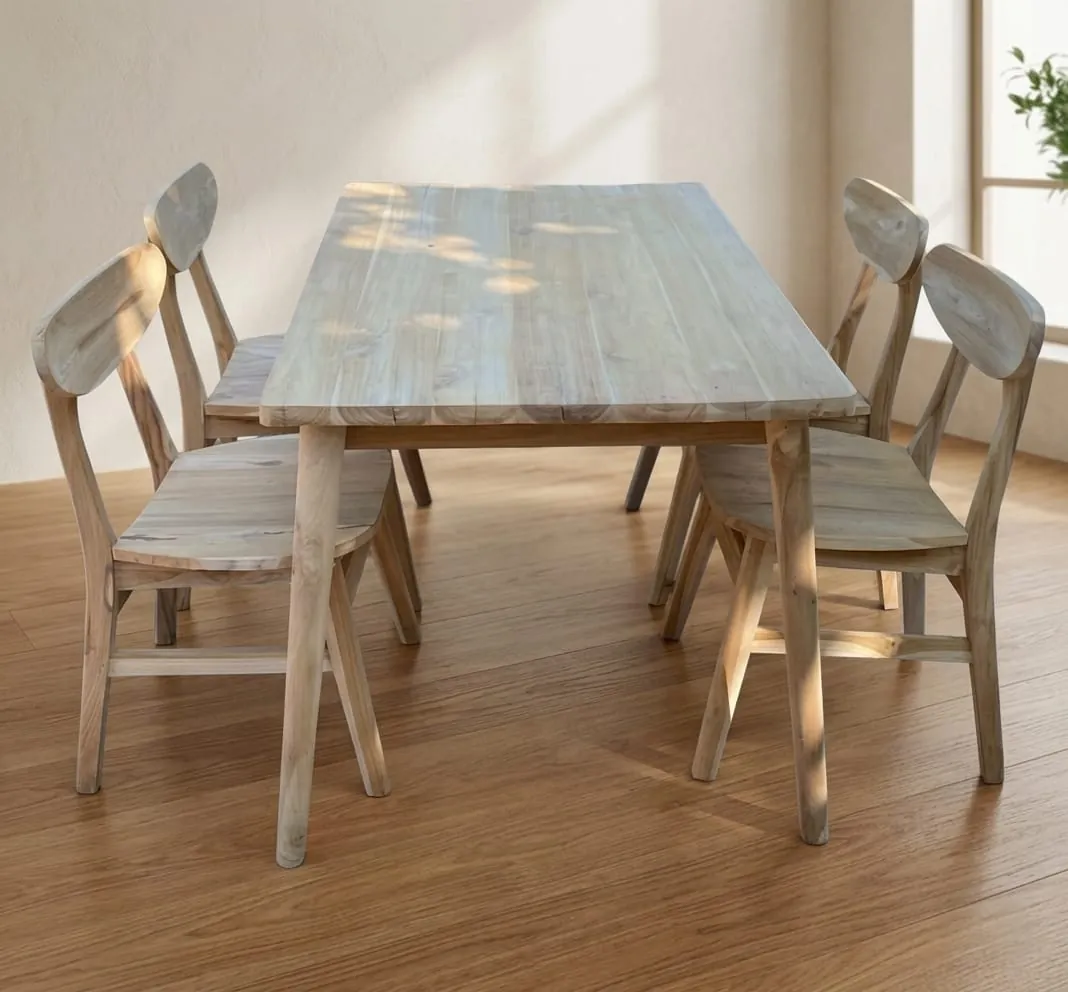
For anything that carries weight, such as table tops, chair legs and bed rails, insist on heartwood. For hidden parts, such as drawer bottoms or the back panel of a cabinet, a little sapwood is acceptable and keeps the price reasonable. Ask any maker, including us, to send photos of the raw boards before finishing. If you want to see the difference in practice, compare a natural finish such as our Raw Teak Dining Set with an oiled one. Raw wood hides nothing.
The wider buying picture is in the complete guide to custom teak furniture in Bali.

Albert Meigo founded Bali Teak House. He trained as an aerospace engineer at Institut Teknologi Bandung and works with simulations of heat, moisture and structural loads, which is why these guides talk about moisture content and joints, not only looks.