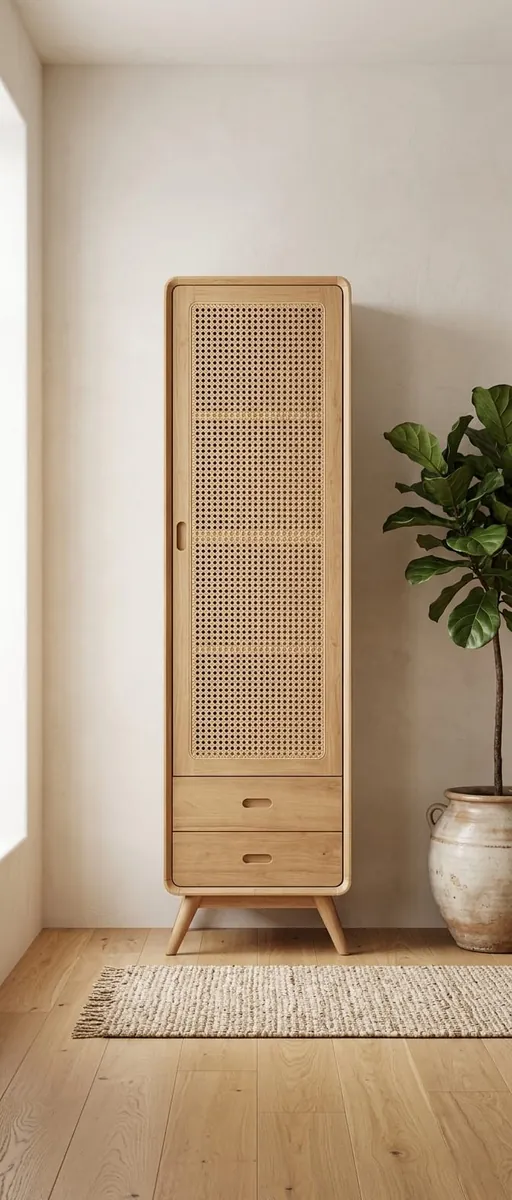
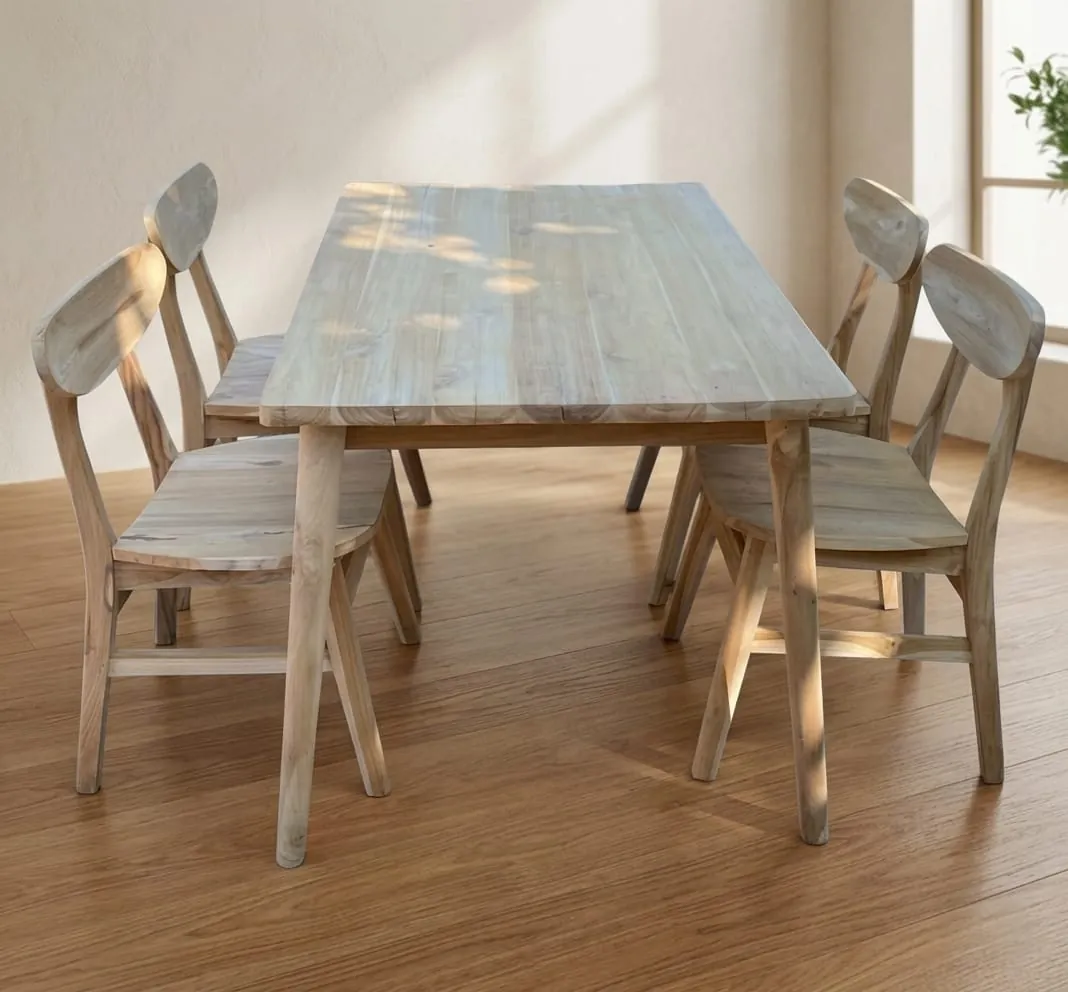
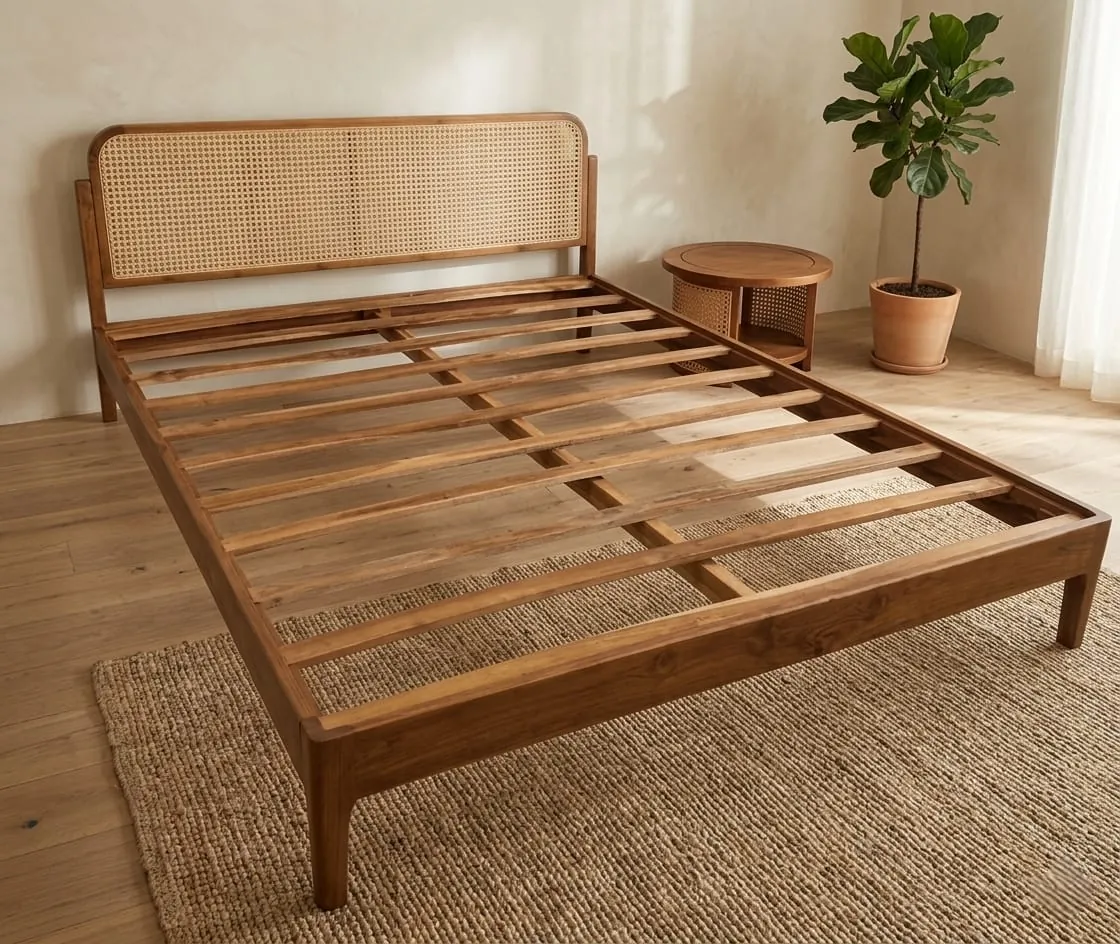
Short answer: termites can eat teak, but they do not like it. The heartwood of mature teak is one of the most rot and termite resistant woods you can buy in Indonesia. The pale outer wood of the same tree, the sapwood, is a different story, and that is where most problems start.
I trained as an engineer, so I trust lab numbers more than words like "termite proof". This guide collects what published studies actually measured, most of them on teak grown in Indonesia, and turns it into a short checklist you can use when you buy.
Two kinds of termites
Subterranean termites live in the soil. They climb walls and furniture legs inside thin tubes of mud, so they need contact with the ground or a damp path from it. Drywood termites live inside the wood itself and need no soil at all. The usual sign is a small pile of hard, sand like pellets under a cabinet or a bed. Both kinds are found across Indonesia, and Indonesian researchers test teak against local species such as Coptotermes curvignathus, a subterranean termite.
What makes teak hard to eat
Teak heartwood carries natural chemicals that termites and fungi avoid. The best known is tectoquinone. A 2016 study in the journal Insects measured about 0.21% of it in teak wood. Extracts of teak heartwood killed 87% to 92% of one termite species in the lab, while pure tectoquinone on its own did much less. The authors concluded that the protection comes from several compounds working together, not from one magic ingredient.
The same study gives an honest warning. Another species, Coptotermes formosanus, shrugged off the extracts: fewer than 5% died, and it ate far more of the treated paper than the first species did. Teak puts termites off. It does not poison every termite that tries it.
Scientists have known this for a long time. In 1958, researchers at Australia's CSIRO fed blocks of teak from Thailand and Indonesia to a subterranean termite for 84 days. The control blocks of mountain ash, a eucalyptus, were eaten completely. The outer heartwood of the Thai teak lost 4.8% of its weight, and the Indonesian sample, cut a little deeper into the log, lost 18.0%. Against two decay fungi, the outer heartwood blocks lost only 0.9% to 2.0%, while the eucalyptus lost 45.6% to 57.8%. When the same team added pure tectoquinone to eucalyptus sawdust, it showed no effect on the fungi and only a slight effect on the termites. Their conclusion, that tectoquinone is not solely responsible, still holds today.
Heartwood and sapwood are not the same wood
A teak log has dark golden heartwood in the centre and a pale band of sapwood under the bark, usually 2 to 6 cm thick according to the CIRAD timber datasheet. Only the heartwood carries the protective chemicals in quantity. A 2023 study tested Indonesian plantation teak against a wood rotting fungus for 12 weeks. The weight each part of the log lost tells the story:
| Part of the log | Weight lost to fungus in 12 weeks |
|---|---|
| Sapwood | 21.4% |
| Outer heartwood | 0.6% |
| Middle heartwood | 2.3% |
| Inner heartwood, near the centre | 10.3% |
| Pith, the very centre | 13.0% |
A study of 15 year old plantation teak from Costa Rica found the same pattern: the outer heartwood rated class 1, very durable, while the sapwood rated only class 3, and the sapwood lost 16% to 19% of its weight against 2% to 3% for the outer heartwood. In practice, both the sapwood and the soft centre of the log should be kept out of legs, joints and frames, because they rot and attract insects first.
Is plantation teak weaker than old teak?
Almost all teak sold in Indonesia today grows in plantations, on state land or on farms. On average, plantation teak is a little less durable. A 2014 review of fast grown plantation teak notes that natural forest teak rates class 1 under European standards, while plantation heartwood can rate class 2 or 3. The main reasons are a higher share of young, juvenile wood and lower levels of natural extractives.
The gap is not fixed, though. The 2023 study above compared Indonesian plantation teak with natural forest teak from Myanmar and found no clear difference in resistance to rot. CIRAD notes that plantation teak varies a lot, but that some mature plantation teak from Indonesia is as durable as natural forest teak.
Age is what matters. Researchers working on Javanese teak tested wood from trees 8, 30 and 51 years old against termites. Wood from the 8 year old trees was attacked the most, and the outer heartwood of the 51 year old trees lost significantly less than that of the youngest trees. Their follow up study shows why: the natural extractives in the outer heartwood rose from 5.30% at 8 years to 7.01% at 30 years and 8.04% at 51 years.
Very young teak may have almost no heartwood at all. A study from Indonesia's research agency BRIN found that 5 year old fast grown teak had not yet formed heartwood. The growing site counts too: a study from Universitas Gadjah Mada found that farm grown heartwood from Panggang and Playen in Gunungkidul resisted termites better than heartwood from a state plantation at Randublatung.
Rainfall where the tree grew matters as well. In a study from Kerala, India, 35 year old teak from a wet, high rainfall site lost 43.30% of its weight to a brown rot fungus in 8 weeks. Teak of the same age from a dry site lost 18.41%, and plantation teak lost 26.88%. The wet site wood was paler and lower in extractives, 12.44% against 15.98%, and the compound that tracked best with resistance was a naphthoquinone. This is about where the tree grew, not where the furniture lives.
Colour gives a rough clue. The 2014 review collects several studies, including work on Javanese teak, that link pale heartwood with lower resistance to fungi and termites, and darker heartwood with higher resistance. The useful sign is how dark the wood is, not how red it is.
How teak compares with other woods sold in Bali
| Wood | What the studies found |
|---|---|
| Teak heartwood | Very durable to moderately durable against fungi, moderately durable against termites, highly resistant in a termite field test |
| Teak sapwood | Moderately durable, loses far more weight to fungi than heartwood |
| Acacia, sengon (albizia) and rubberwood | Very susceptible to termites, need treatment |
| Mango wood | Lost 35.28% of its weight to a fungus in 16 weeks, classed as perishable |
The acacia, sengon and rubberwood results come from a Malaysian study with the aggressive Coptotermes formosanus, where Malaysian grown teak showed a high degree of resistance in the field. The mango figure comes from a study in Bangladesh, where mango also lost 42.36% of its weight in a field test. If a piece of furniture in Bali is much cheaper than teak, it is often one of these woods.
Mould is the other everyday worry in a humid climate. In a 2023 study in Scientific Reports, wood blocks were kept with two common household moulds for 36 months at 27°C and 70% humidity. The moulds grew through a non durable wood, while teak resisted them. Mould can still grow on dust, spills or old oil on the surface, which our care guide covers.
What "moderately durable" means for your furniture
Under the European rating system, teak is class M against termites: moderately durable, not immune. Indoors and off the ground, a piece made from mature heartwood is a very safe choice for Bali. Trouble usually comes from three things: legs standing on bare soil, a cabinet pressed against a damp wall, or sapwood hidden in a frame.
A checklist before and after you buy
- Ask whether visible and structural parts are heartwood only. Sapwood looks pale and yellowish next to the golden brown heartwood. Our guide to teak grades shows the difference.
- Prefer evenly golden brown heartwood. Very pale heartwood is often younger wood with fewer natural extractives.
- Ask roughly how old the trees were. Older trees mean more heartwood and more natural protection.
- Outdoors, keep legs off bare soil. Stand them on tiles, stone or small pads.
- Leave a few centimetres between tall cabinets and the wall, so you can see mud tubes early.
- Every few months, look for mud tubes, small round holes or piles of pellets.
- If you find termites, call a pest control service. Moving the piece to another room usually moves the problem with it.
Sources
- CIRAD (2023). Teak (Tectona grandis), Tropix technical sheet. tropix.cirad.fr
- Ismayati, M. et al. (2016). Toxicity and feeding deterrent effect of 2-methylanthraquinone from the wood extractives of Tectona grandis on the subterranean termites Coptotermes formosanus and Reticulitermes speratus. Insects 7(4): 63. doi.org/10.3390/insects7040063
- Yamamoto, K. (2023). Decay resistance of plantation teak and natural teak (in French). Bois et Forêts des Tropiques 358: 31 to 38. doi.org/10.19182/bft2023.358.a37246
- Terziev, N., Daniel, G., Wolfsmayr, U.J. (2008). Natural durability and anatomical features of teak (Tectona grandis) from plantations in Costa Rica. IRG Americas Regional Meeting. research.slu.se
- Lukmandaru, G., Takahashi, K. (2008). Variation in the natural termite resistance of teak wood as a function of tree age. Annals of Forest Science 65: 708. doi.org/10.1051/forest:2008047
- Lukmandaru, G., Takahashi, K. (2009). Radial distribution of quinones in plantation teak. Annals of Forest Science 66: 605. doi.org/10.1051/forest/2009051
- Basri, E., Saefudin (2021). Improving physical and mechanical properties of fast grown teak by heat compression (in Indonesian). Jurnal Penelitian Hasil Hutan 39(3): 121 to 128. doi.org/10.20886/jphh.2021.39.3.121-128
- Lukmandaru, G. et al. (2018). Study of teakwood quality from community forests in Gunungkidul. VII. Natural subterranean termite resistance (in Indonesian). Jurnal Ilmu Kehutanan 12(1): 22 to 39. doi.org/10.22146/jik.34107
- Grace, J.K., Wong, A.H.H., Tome, C.H.M. (1997). Termite resistance of potential forest plantation woods in Malaysia. Proceedings of the 4th Conference on Forestry and Forest Products Research, FRIM. ir.unimas.my/16095
- Islam, M.M., Hannan, M.O., Islam, M.W. (2008). Comparative study on natural durability of mango and raintree wood in fungal and field test. Khulna University Studies. kus.ku.ac.bd
- Rudman, P., Da Costa, E.W.B., Gay, F.J., Wetherly, A.H. (1958). Relationship of tectoquinone to durability in Tectona grandis. Nature 181: 721 to 722. doi.org/10.1038/181721b0
- Thulasidas, P.K., Bhat, K.M. (2007). Chemical extractive compounds determining the brown-rot decay resistance of teak wood. Holz als Roh- und Werkstoff 65: 121 to 124. doi.org/10.1007/s00107-006-0127-7
- Moya, R., Bond, B., Quesada, H. (2014). A review of heartwood properties of Tectona grandis trees from fast-growth plantations. Wood Science and Technology 48: 411 to 433. doi.org/10.1007/s00226-014-0618-3
- Mansour, M.M.A. et al. (2023). Long-term fungal inoculation of Ficus sycomorus and Tectona grandis woods with Aspergillus flavus and Penicillium chrysogenum. Scientific Reports 13: 10453. doi.org/10.1038/s41598-023-37479-1

Albert Meigo founded Bali Teak House. He trained as an aerospace engineer at Institut Teknologi Bandung and works with simulations of heat, moisture and structural loads, which is why these guides talk about moisture content and joints, not only looks.